CYBERSECURITY
Enterprise cybersecurity for the estate you already run: threat detection, identity and access, endpoint and cloud protection, and the data controls underneath them. We design, deploy and monitor those controls so an incident is caught early, contained quickly, and does not stop the business.
Cybersecurity Overview
Our cybersecurity solutions cover six areas: governance and data protection, cloud and infrastructure security, threat detection and response, identity and access, endpoint protection, and vulnerability management.
Governance Alignment
Governance and data protection: decide who owns which control, how data is classified and where evidence lives, so security work maps to real obligations.
Continuous Asset Discovery
Cloud and infrastructure security: keep an accurate list of what you run across cloud accounts and on-premise systems, because an asset nobody tracks is one nobody patches.
Automated Threat Containment
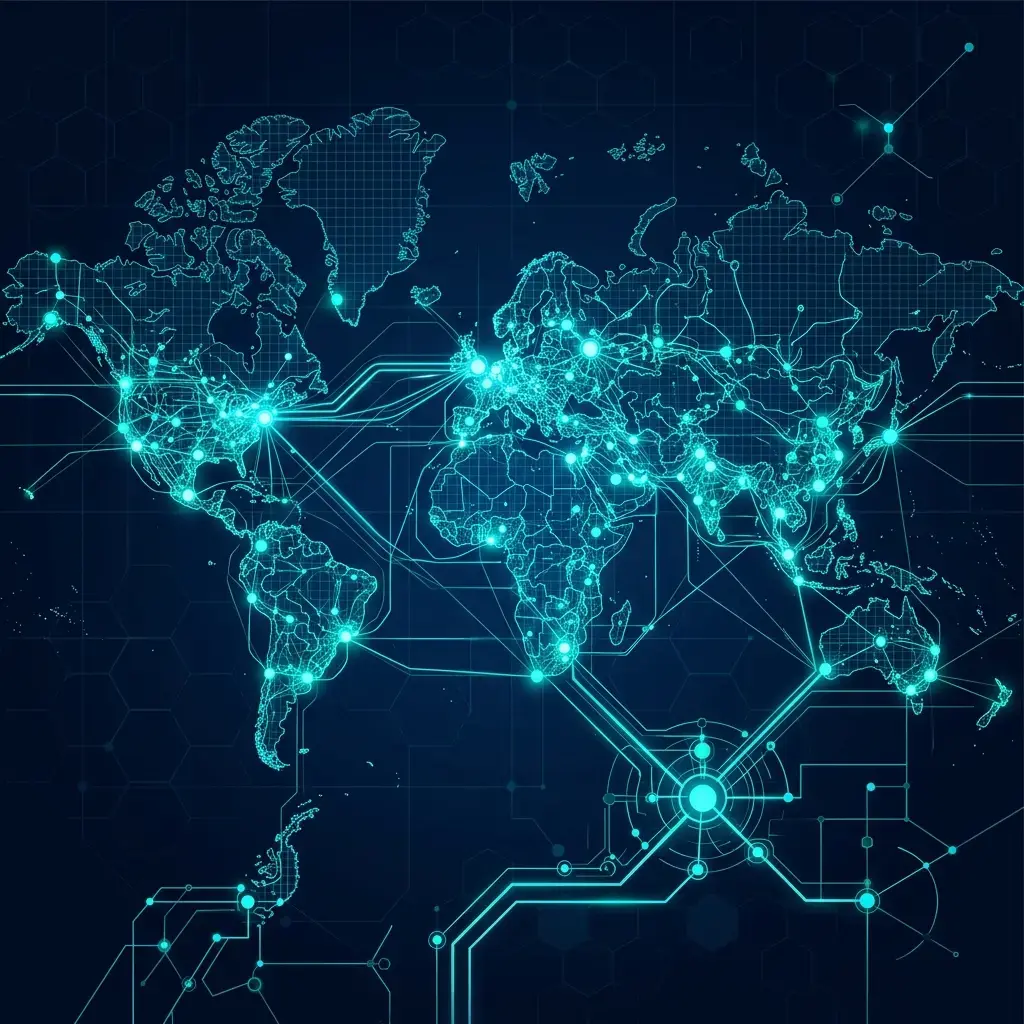
Threat detection and response: catch unusual behaviour early and contain it on the host where it started, before it becomes an incident that spreads.
Vulnerability Remediation
Vulnerability management: track which systems are exposed to newly disclosed flaws and get the fixes out in a sequence that reflects the risk.
Security Information and Event Management
Ingest telemetry data from every network device, service application, and storage database in real-time.
Interactive Telemetry Viewer
Example events, grouped the way a SIEM console groups them

Long-Term Storage Options
Retain logs in tamper-evident storage, so the record is still there when a review asks for it.
Continuous Agent Ingestion
Orchestrate lightweight agents across cloud and on-premise environments.
Global Policy Enforcement
Synchronize security policies and compliance rules across enterprise systems.
Security Operations Center
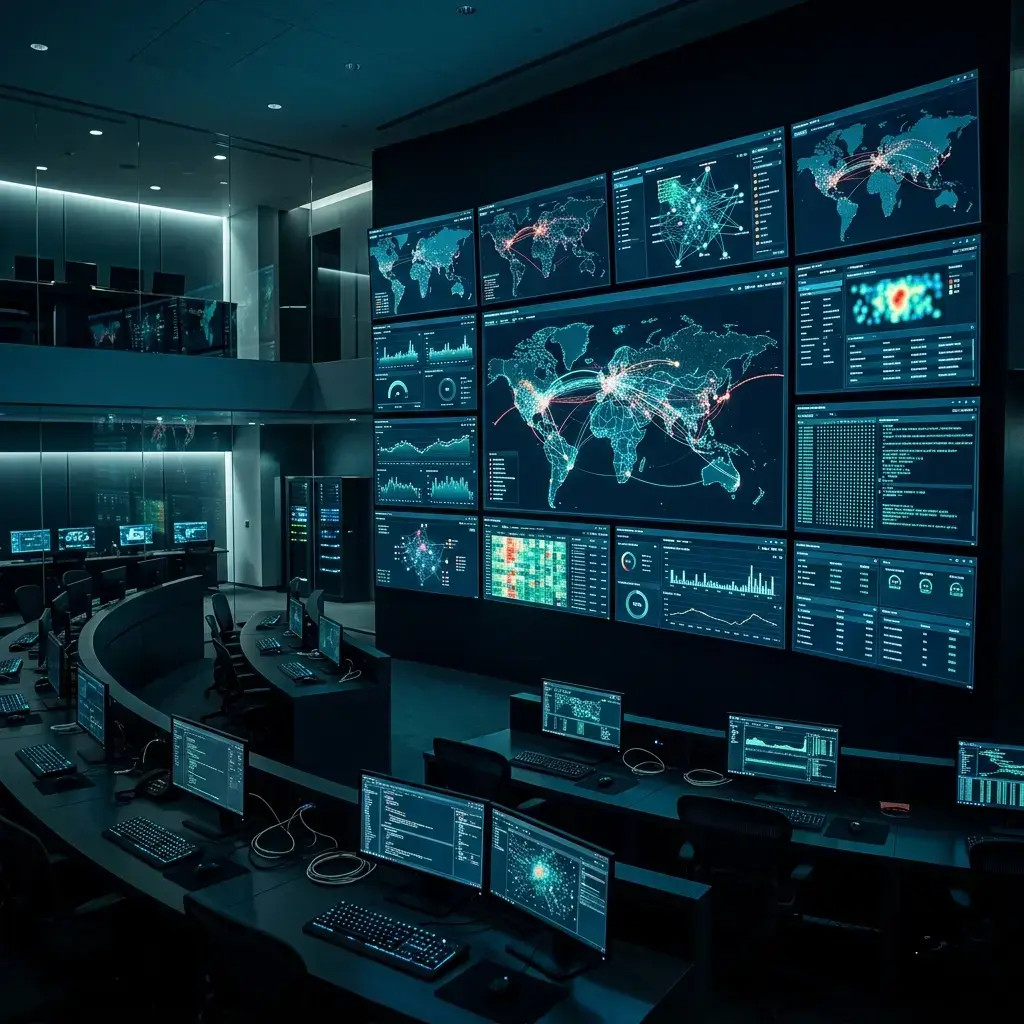
Security events from your systems are collected, correlated and triaged by our security team. Coverage hours and escalation paths are agreed in the engagement rather than assumed.
01. Dynamic Threat Assessment
All ingestion agents collect metadata from endpoints, cloud buckets, and identity directory nodes. Anomalies are prioritized using heuristic security profiles.
02. Automated Sandbox Evaluation
Suspect payloads, unknown scripts, or weird API request schemes are forwarded to isolated verification containers to test for malicious execution.
03. Automated Countermeasures
When a malicious pattern is confirmed, containment runs immediately: affected hosts are isolated and the credentials involved are revoked before the problem spreads.
04. Forensic Integrity Validation
Post-containment, our SOC specialists perform deep system architecture evaluations to document drift, compile evidence, and restore nodes securely.
Zero Trust Architecture
Never trust, always verify. Enforce continuous authorization requirements at every API interface, device connection, and session flow.
Micro-Segmentation
Partition internal networks into logical units to prevent threat actors from propagating laterally across critical directories.
Identity Verification
Continuously validate user identity, device posture, session integrity, and authentication signals before granting access.
Device Trust Scoring
Analyze endpoint health, patch compliance, risk score, and behavioral indicators before allowing network access.
Policy Enforcement
Apply adaptive access policies dynamically based on location, role, risk level, and operational context.
Identity and Access Management
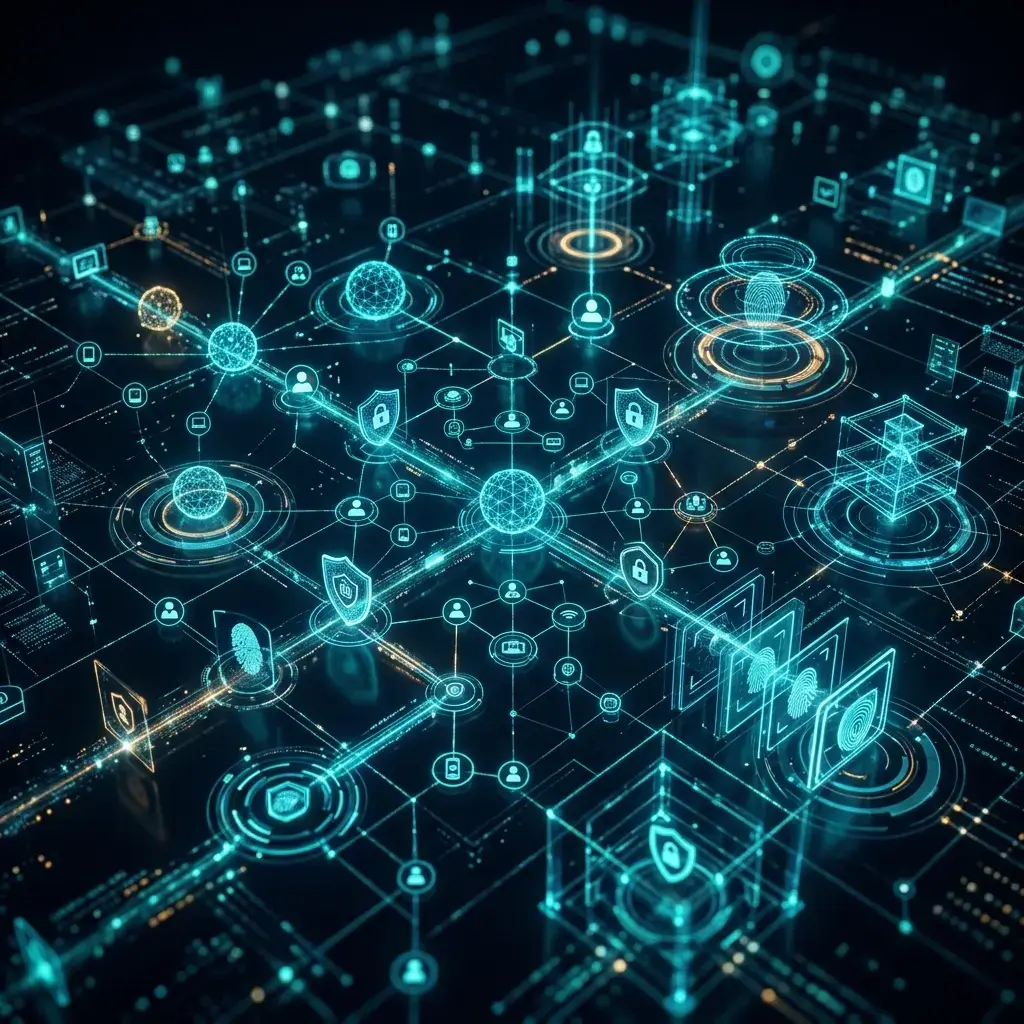
Most breaches start with a credential rather than an exploit. Role-based permissions, single sign-on and multi-factor checks keep an account from becoming a way into everything.
Privileged Access Roles
Audit privileged access settings and reduce administrator attack exposure automatically.
Unified SSO Gatekeepers
Centralize access control through integrated SSO and directory authentication services.
Endpoint Security
Defend every employee terminal, testing environment, cloud workload, and mobile host against exploitation.
Anti-Malware & EDR
Enforce active Endpoint Detection and Response (EDR) agents scanning processes continuously for threat indicators and behavioral anomalies across every host.
- Real-time file execution hashing
- Behavioral heuristics analysis
- Automated threat quarantine
- Cross-endpoint telemetry correlation
Data Leak Prevention
Intercept sensitive documents, financial datasets, or credential files before they egress local networks.
Software Patch Matrix
Enforce immediate, automated deployment of operating system updates and critical software dependencies.
Threat Detection
Insulate operations with predictive security. We ingest multi-vector threat signals, mapping heuristics continuously against industry datasets to identify attacks early.
Signal Correlation
Collect authentication and endpoint events for continuous security correlation.
Anomaly Prioritization
Prioritize security anomalies using dynamic risk scoring and severity analysis.
Remediation Dispatches
Deploy containment workflows instantly with forensic logging and audit tracking.
Incident Response
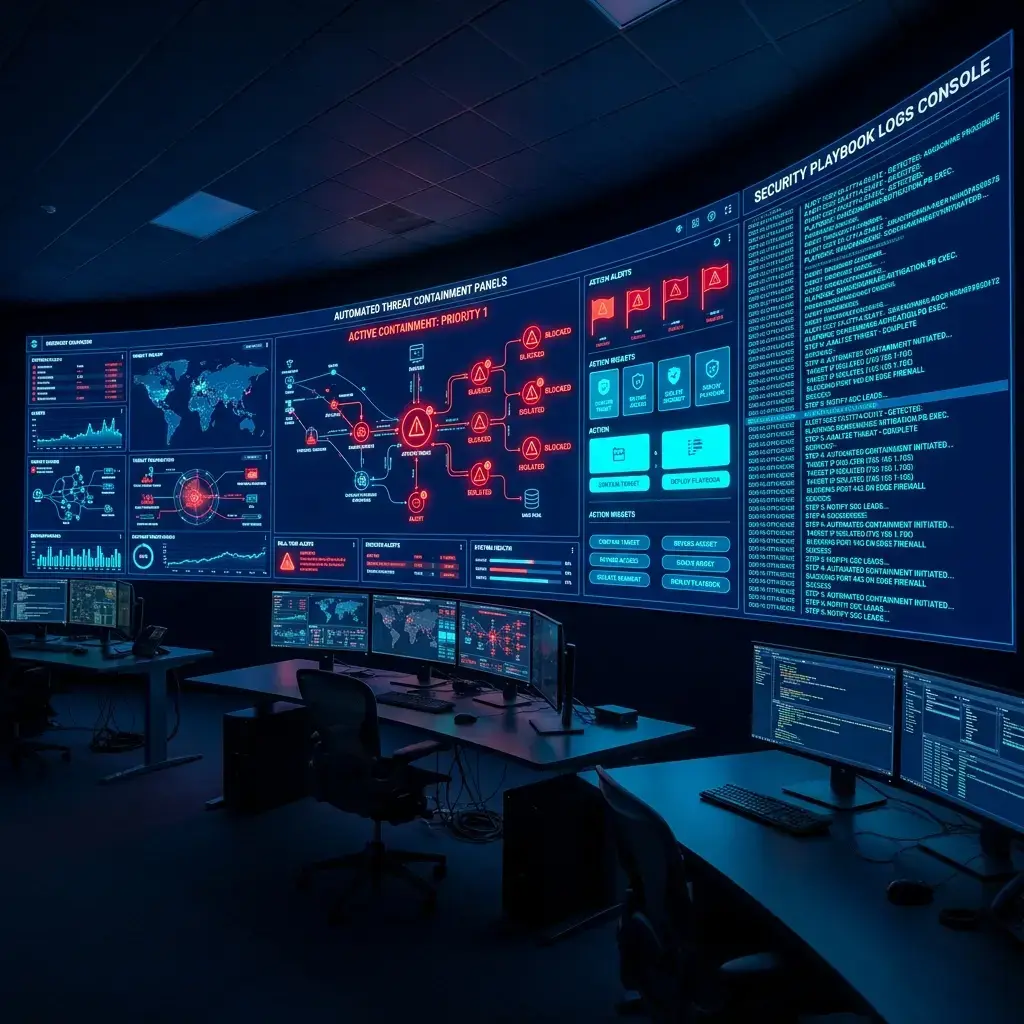
Minimize business disruption with stateful playbook automation. Intercept compromised servers and credentials dynamically.
Playbook Automation
Our automated playbook orchestrates targeted isolation commands immediately upon anomalous signal correlation, cutting execution latency down.
Cybersecurity by Industry
Business cybersecurity solutions are judged by what a breach would cost, and that cost is different in every sector. Each one below states the problem, the approach we take and the outcome.
Government
Citizen records and case systems sit across departments and legacy platforms, with access that accumulated over years and nobody owning the whole picture.
Identity consolidation, least-privilege access reviews, segmentation between departments, and monitoring that covers the older systems as well as the new ones.
Access is traceable to a person and a reason, and the evidence a public-sector audit asks for exists without a manual scramble.
Healthcare
Patient data moves between clinical systems, devices and third parties, while clinicians need it quickly enough that controls get worked around.
Data protection at rest and in transit, role-based access tied to clinical function, device and endpoint controls, and logging of who opened which record.
Sensitive records stay protected without slowing care, and the access trail supports the obligations your privacy team is accountable for.
Finance
Payment and trading systems are attractive targets, and the damage from an account compromise is immediate and quantifiable.
Zero Trust access for privileged systems, continuous monitoring of authentication and transaction patterns, and rehearsed incident response.
Suspicious access is caught while it is happening rather than in a month-end review, and containment follows a plan the team has already practised.
Enterprise Technology
Cloud estates grow faster than the controls around them: new services, new identities, new integrations, and no single view of what is exposed.
Cloud configuration and identity review, asset discovery, consolidated security monitoring, and automated checks in the release pipeline.
Teams keep shipping while exposure stays visible, and a misconfiguration is found by your own tooling rather than by someone else.
Where Cybersecurity Ends and AI Security Begins
This page covers enterprise cybersecurity: the infrastructure, identities, endpoints, cloud environments and data your business already runs on. Three neighbouring capabilities cover what it does not.
AI Security
For risks that only exist once you run AI: prompt injection, sensitive data reaching a model, unsafe outputs and agents taking actions of their own. If your requirement is AI-specific, start there.
Explore AI SecuritySovereign AI
For control rather than protection: keeping models, data and infrastructure inside a boundary you own, for organisations whose data cannot leave it. A sovereign deployment still needs the controls on this page.
Explore Sovereign AIAI Infrastructure
For the compute and hosting AI workloads run on, in cloud, hybrid or on-premise environments. Cybersecurity protects that infrastructure once it exists.
Explore AI InfrastructureNot sure where your security and governance stand today?
The readiness assessment reviews how your organisation handles security, data and governance, and returns a prioritised list rather than a score. Our governance and compliance work, including how we support ISO 27001 and SOC 2 control requirements, is set out on the Quality and Security page.
Cybersecurity Services FAQs
Enterprise cybersecurity across the estate you already run: threat detection and monitoring, Zero Trust access, identity and access management, endpoint protection, cloud and infrastructure security, data protection, and incident response. The work is scoped to your environment rather than sold as a fixed bundle.
Cybersecurity protects the enterprise: networks, identities, endpoints, cloud environments, applications and business data. AI Security covers what is specific to AI systems — models, AI applications, agents and the prompts and outputs flowing through them. Most organisations running AI need both, because an AI system sits on the infrastructure cybersecurity protects.
Sovereign AI is about control: keeping AI models, data and infrastructure inside a boundary you own, for organisations whose data cannot leave it. Cybersecurity is about protecting whatever you run, wherever it runs. A sovereign deployment still needs the identity, monitoring and endpoint controls described on this page.
Both are possible. Some engagements are a defined piece of work such as a Zero Trust rollout or an identity review. Others run as managed cybersecurity services, where security events from your systems are collected, correlated and escalated on an ongoing basis. Which one fits depends on the security team you already have.
We build and operate against the controls that frameworks such as ISO 27001 and SOC 2 examine, and the data-handling expectations of regulations such as GDPR and HIPAA. To be precise about what that means: these are controls and evidence that support your compliance programme. Certification and audit opinions are issued by auditors, not by a supplier. Our governance and compliance work is set out on the Quality and Security page.
With an assessment of what you have: which systems hold sensitive data, how identity and access are handled today, what is already monitored and what is not. That produces a prioritised list of gaps, and the work is sequenced against your own risk rather than against a generic checklist.
Securing the Future
Tell us what you run, what holds your sensitive data and what is monitored today. We will map the gaps, sequence them against your own risk, and tell you what the first phase looks like.