X
APPXCESS
SINGAPOREUAEUSAMALAYSIAAUSTRALIAINDIASOUTH KOREAJAPAN

AI WORKFORCE TRANSFORMATION

Most organisations buy AI tools before their people are ready to use them, and adoption stalls somewhere between the pilot and the day job. AI workforce transformation closes that gap: AI literacy and role-specific upskilling that turn tools your teams already have into productivity they actually get, and AI capability that holds once the rollout is over.

Workforce Readiness
Know Where You Stand
AI Capability Building
Skills By Role
AI Adoption
Used On Real Work
Lasting Capability
Capability That Holds
// Foundational Competence

AI Literacy Programs

Enterprise AI training in plain language, from the executive team to the front line. Each programme states the skill, where it applies in the working day, and what the organisation gets once people have it.

AI Fundamentals

LEVEL 1

What AI can and cannot do, and where it is likely to be wrong. Applied to the tools your teams already have, so people stop either over-trusting an answer or avoiding the tool entirely.

Responsible AI

GOVERNANCE

What may go into a prompt, when an answer needs checking, and who signs off. Applied to real decisions in your workflows, so staff use AI without putting confidential data or a customer commitment at risk.

Practical Application

EXECUTION

How to ask for what you need and check what comes back. Applied to the tasks each role does every week, so the time saved is real rather than theoretical.

Corporate learning environment
// Who Learns What

AI Upskilling Paths by Audience

An executive and a support analyst need different things from the same programme. Each path below states the skills, where they are applied, and what the organisation gets once that group has them.

Executives

Skills

What AI changes about cost, risk and competition in your sector; how to read an AI proposal; where governance has to sit before adoption scales.

Where It Applies

Investment decisions, board and regulator conversations, and setting the organisation-wide position on what AI may and may not be used for.

Workforce Benefit

AI decisions get made on merit rather than on vendor confidence, and the mandate reaches the teams who have to deliver it.

Managers

Skills

Spotting which tasks in a team’s week are worth automating, running adoption without losing quality, and recognising when an AI output needs a human check.

Where It Applies

Team workflows, workload planning, and the day-to-day decisions about when staff should and should not reach for a tool.

Workforce Benefit

Adoption happens inside teams rather than being announced at them, and the productivity gain survives contact with real work.

Technical Teams

Skills

Working knowledge of models, prompts and agent tooling, integration patterns, evaluation, and the controls that keep AI systems governable.

Where It Applies

Building and running the AI systems the organisation depends on, and assessing what is safe to put into production.

Workforce Benefit

Implementation stops depending on outside help, and technical judgement on AI is available in-house.

General Employees

Skills

Practical AI literacy: how to ask for what you need, how to check what comes back, and what must never go into a prompt.

Where It Applies

The routine work each role does every week — drafting, summarising, searching, preparing and checking.

Workforce Benefit

Time comes back across the whole organisation rather than in a handful of technical teams, without new data risk.

// Continuous Growth

Enterprise Training Systems

Deliver scalable workforce education experiences aligned with enterprise objectives and operational needs.

Corporate learning desk

Workforce Enablement

Deliver role-based workforce training.

Structured Learning

Create structured workforce learning paths.

Continuous Development

Adapt training to evolving AI models and best practices.

// Digital Sandbox

AI Training Platforms

Provide modern environments that support AI education, hands-on practice, and enterprise skill development.

// Interactive Sandbox

Select Practice Module

Choose a training track below to simulate compiler outputs and test real-world enterprise workloads.

Module Profile: Fine-TuningReady
Cluster FabricA100 SXM4 x8
Security EnclaveSOC2 Airgap Verified
Dedicated Sandbox ClusterLatency: 14ms
sandbox-session:~/llm-runtime.shLIVE
// Fine-tuning log initialized...
Dataset partitions: 104,202 tokens parsed.
Learning Rate: 2e-5 | Epochs: 3/3 | Loss value: 0.124
Status: Fine-tuning weights compiled successfully.
// Model checkpoint saved to: /models/enterprise-lora-v1
Digital learning workspace
Enterprise Practice Lab
// Learning Logistics

Learning Management Systems

Coordinate learning journeys, training programs, and workforce development initiatives through centralized platforms.

Enterprise Upskilling Coordination

Manage scalable upskilling operations across departments. Structured training dashboards track program completion yields and active capabilities mapping.

Active
Curricula Management

Design, organize, and structure comprehensive multi-tier learning programs aligned with departmental and long-term organizational goals.

  • Program Alignment
  • Learning Standards
  • Department Mapping
Built around: your roles and departments
Tracked
Development Pathways

Define career progression paths, map key competency frameworks, and track employee skill levels.

  • Skill Tracking
  • Role Progression
  • Competency Frameworks
Built around: the skills each role needs
Compliance StandardsSCORM / xAPI Certified
Learning CoverageEnterprise-wide Training
ReportingReal-time Progress Analytics
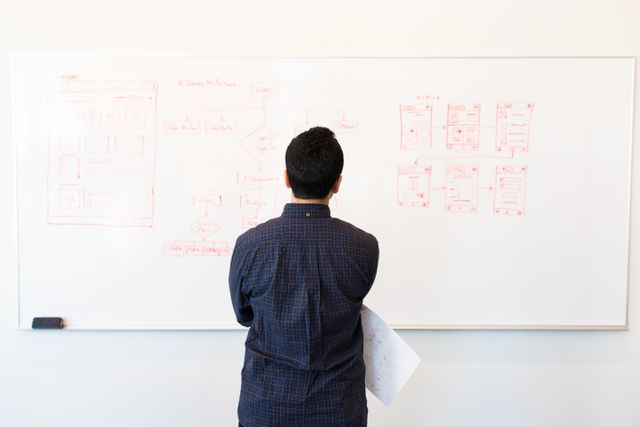
Whiteboard flowchart planning
// Capability Analytics

Skill Assessment Platforms

Measure workforce capabilities and identify opportunities for continuous improvement and growth.

72%Target Readiness Level (Set It)
Target Upskilling
9 Weeks
Drift Anomaly
0.23%
Readiness Level
Foundation

Key Assessment Dimensions

Technical ReadinessInfrastructure & tooling
AI Tool AdoptionWorkflow integration
Workforce CapabilityUpskilling velocity
Process MaturityGovernance & standards
Workforce skill assessment workspace
// Culture & Adaptability

Corporate Learning

Create a culture of continuous learning that supports innovation, adaptability, and business transformation.

// Shared Knowledge

Establishing a Learning Culture

Upskilling is not a one-time class. We help enterprises construct shared internal wiki structures, peer-to-peer prompt validation guilds, and sandbox environments where innovation is continuous.

Corporate knowledge table
// Strategic Analytics

Workforce Intelligence

Understand workforce capabilities, readiness levels, and transformation opportunities through strategic insights.

Workforce Capability Matrix

Isolate active skills profile diagnostics

// AI Engineer Readiness Profile:
Key Skillsets: Model training, API orchestrations, vector DB configuration.
Readiness Score: 84% | Gap areas: Low-latency inference frameworks.
Recommendations: Establish sandbox fine-tuning protocols.
Database synchronized dynamically.
Boardroom screens display
// Transformation Pathway

Transformation Roadmap

Three phases from a workforce that has heard of AI to one that uses it daily. Each phase below lists what happens, what you hold at the end of it, and what to measure — measures to agree with you, not targets we can set from here.

01Phase 1 · Months 0–3

Foundation

Establish a baseline: what people already understand, what they are already using, and what the organisation is prepared to allow.

Key Activities
AI literacy sessions across departments, a shared vocabulary so teams mean the same thing by the same words, and the first responsible-AI guidelines agreed with the people who will enforce them.
Deliverables
A readiness baseline by department, an agreed AI usage policy, and a shortlist of the roles where AI would help most.
What To Measure
Coverage of the literacy programme by department, and how much shadow usage of unapproved tools is already happening.
Workforce Outcome

Staff stop treating AI as either magic or a threat, and leadership knows where the organisation actually stands.

Planning milestone session
02Phase 2 · Months 3–9

Capability Development

Move from awareness to skill: role-specific training on the tasks each group actually does.

Key Activities
Training paths per audience, a safe environment to practise in, courseware delivered through the learning systems you already run, and competency checks for the technical teams.
Deliverables
Completed role-based paths, practised use of the approved tools, and a record of who is competent in what.
What To Measure
Completion and competency by role, and whether trained staff are using the tools on real work rather than only in training.
Workforce Outcome

Each group can do something with AI they could not do before, on the work in front of them.

03Phase 3 · Months 9+

Transformation

Embed it: AI becomes part of how work is done rather than a course people attended.

Key Activities
Redesign of the workflows where AI now fits, internal champions who support their own teams, and refresher paths as tools change.
Deliverables
Updated ways of working in the teams that adopted, an internal support structure, and a plan for keeping capability current.
What To Measure
Sustained usage after training ends, time spent on the tasks AI was meant to absorb, and how much support still routes to a central team.
Workforce Outcome

AI capability holds without a programme running behind it, and new tools land on a workforce that can already absorb them.

// The Wider Journey

Assess, Upskill, Adopt, Scale

Workforce transformation is the middle of a longer path. Knowing which stage you are at usually settles what to do first.

01

Assess

Establish where the organisation actually stands: current capability, governance, data, and which teams are already using AI unofficially.

Covered elsewhere
02

Upskill

Build the skills the assessment says are missing, by role. AI literacy for everyone, deeper capability where the work demands it.

This page
03

Adopt

Put the skills to work in real workflows, with the guardrails agreed during the foundation phase and support from managers who were trained first.

This page
04

Scale

Extend what worked to the rest of the organisation, keep capability current as tools change, and build the AI systems the business now has the skills to run.

Covered elsewhere

The first stage is the AI Readiness Assessment, which reviews capability, data and governance and returns a prioritised list — it tells you where you stand, where this page turns that into skills people hold. For the last stage, building and running the systems themselves, AI Solutions covers custom applications, agents and workflow automation, and Data & AI covers the data platforms and engineering underneath them.

// Executive Briefing

Build An AI-Ready Workforce

Tell us which teams are meant to adopt AI, what they already have access to, and where it is stalling. We will map the skills gap by role and set out what a first phase of AI workforce training would cover.