ENTERPRISE AI
INFRASTRUCTURE
YOU CONTROL
AI infrastructure solutions for enterprises that need their models, data and compute under their own control.
AppXcess designs, deploys and runs the GPU compute, storage, networking and deployment platform that enterprise AI depends on — in your cloud, in your data centre, or across both. It is for organisations whose AI work is limited by capacity, cost or data residency rules, and whose teams should be building models rather than managing servers.

Deploy AI Without Losing Control
Deploy models inside private, isolated environments to secure complete ownership of your hardware, weights, and inputs.
Avoid the exposure risks of public AI platforms. With AppXcess, your sensitive data and model weights remain inside secure local enclaves, ensuring total compliance and control.
Comparing external cloud-hosted public models against isolated, enterprise-controlled local enclaves.
Corporate data queries escape local firewalls to public third-party endpoints. Shared servers index proprietary weights, triggering intellectual property leakages.
- ✗External Servers: Data flows outside corporate firewalls.
- ✗Shared Weights: Third-party models train on queries.
- ✗Compliance Risks: Exposes proprietary workloads.
Local model instances execute within protected boundary layers. Strict access tokens check query routing, keeping weights isolated from external endpoints.
- ✓Local Boundary: Data stays 100% inside private systems.
- ✓Model Ownership: Weights belong to your organization.
- ✓Total Compliance: Meets GDPR, SOC2 with physical control.
Private LLM
Deploy enterprise-grade language models exclusively within your organization's infrastructure, ensuring complete ownership of intellectual property and operational intelligence.
↳ Prevent leakage of sensitive datasets or codebases to external public vendors.

Private AI Infrastructure
Build fully controlled, enterprise-grade private AI environments. Retain complete ownership of your infrastructure assets, model architectures, and sensitive operational databases.
Dedicated AI Environments
Completely isolated compute environments reserved solely for your organization's workloads, preventing resource sharing.
Infrastructure Ownership
Depreciate capital hardware assets on your own balance sheets with complete physical and operational control.
Private Deployment
Deploy offline model weights and fine-tune specialized models entirely behind custom secure corporate network firewalls.
Secure Operations
Enforce company-wide data protection policies, secure network access keys, and hardware key validations.


Sovereign AI Infrastructure
Ensure absolute data residency and regional compliance. Run localized AI nodes under strict regional regulations and sovereign governance models.
Data Sovereignty
Ensures customer queries and system data remain strictly within defined regional borders.
Regional Compliance
Aligns with national security guidelines, local regulations, and global sovereignty laws.
Local AI Deployment
Eliminates external API or foreign cloud dependencies by running all AI workloads locally.
Controlled Governance
Provides administrative control over access protocols, system audit logs, and data pipelines.
Cross-Cloud AI Orchestration
Deploy and manage AI workloads across leading cloud ecosystems while maintaining flexibility, resilience and scalability.
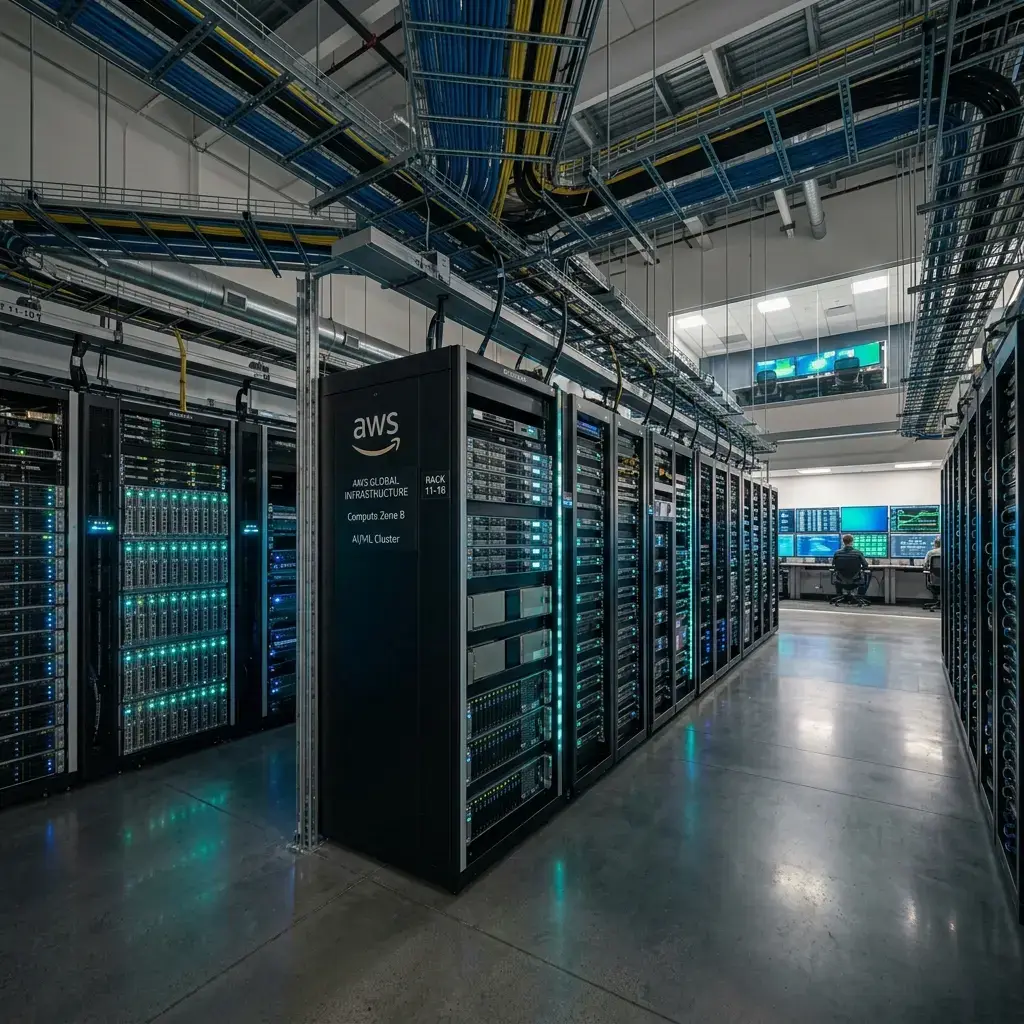
Amazon Web Services
Wide availability of custom P4/P5 H100 instances, deep integration with S3 datalakes, and robust IAM identity boundaries.
Direct VPC orchestration with AppXcess Managed Kubernetes and bare-metal ECS nodes.
High-performance inference routing and large-scale vector databases serving global traffic.

AI Compute Clusters
Scale compute capacity dynamically. Run distributed workloads across high-performance GPU/TPU nodes optimized for complex AI executions.
GPU Computing
Interconnected GPU clusters (NVIDIA H100/H200) run training and inference in parallel, so model work that would queue for days on general hardware moves in step with your roadmap.
Storage and Data Throughput
High-throughput storage keeps training data moving to the GPUs, so expensive compute is not sitting idle waiting for the next batch.
Networking and Interconnect
Low-latency, secure links between nodes and regions let a distributed job behave like one cluster, which is what makes larger models practical to train.
Scalability
Capacity is allocated to the workloads that matter and released when they finish, so spend follows demand instead of peak provisioning.
AI Training Environments
Accelerate model development cycle times. Run training pipelines on high-throughput compute environments with unified tracking consoles.
Model Training and Fine-Tuning
Train and fine-tune language and vision models on your own datasets, inside your boundary, so proprietary data never leaves it.
Training Pipelines
Automated sweeps, checkpoints and weight snapshots mean a failed run resumes instead of restarting, which protects both the schedule and the compute budget.
Data Processing
Ingest, clean and map text, image and telemetry data into training-ready sets, so data preparation stops being the bottleneck ahead of every run.
Experiment Tracking
Every run records its data, parameters and results, so a model in production can be traced back to exactly how it was built.


Model Deployment Hub
Transition models from development to production seamlessly. Deploy automated release cycles and scale vector hosting infrastructures with unified versioning controls.
LLM and Model Deployment
Rolling updates, canary releases and automated checks put a new model version in front of users without taking the service down.
Hosting Infrastructure
Serving stacks built on engines such as Triton and vLLM host your models on your infrastructure, avoiding per-token costs on an external API.
Deployment Automation
Kubernetes workloads, autoscaling and load balancing are configured once, so releases are repeatable rather than hand-run each time.
Versioning and Rollback
Active weights and configurations are tracked, so a bad release is rolled back in minutes rather than debugged in production.
Real-Time Inference Network
Expose model endpoints globally with minimal latency. Route query traffic intelligently to optimize system throughput and response times.
Low-Latency Inference
Tuned routing, caching and load distribution keep response times steady, which is what makes an AI feature usable inside a live business process.
Regional Routing
Queries are served from the region closest to the user, and stay inside the regions your data rules allow.
Endpoint Management
Endpoint health, rate limits and API gateways are managed centrally, so a single team cannot exhaust the capacity others need.
Handling Demand Peaks
Traffic is balanced across the cluster so a spike in usage degrades gracefully instead of taking the service down.

Multi-Cloud Orchestration
Coordinate workflows across cloud environments seamlessly. Leverage a unified operations center to orchestrate resource allocations and sync databases.
AWS
SageMaker, compute and storage services and VPC routing, run as part of one managed estate rather than a separate silo.
Microsoft Azure
AKS node pools, Key Vault and Active Directory, so AI workloads inherit the identity and key management your organisation already uses.
Google Cloud
GKE clusters, Vertex AI model tracking and TPU capacity, useful where a workload runs better on Google accelerators.
DigitalOcean and Private Environments
Smaller cloud footprints and your own data centre sit under the same control plane, so cost, capacity and health are read in one place.


Enterprise AI Compute Infrastructure
High-performance hardware clusters optimized for rapid AI training, inference, and model deployment pipelines.
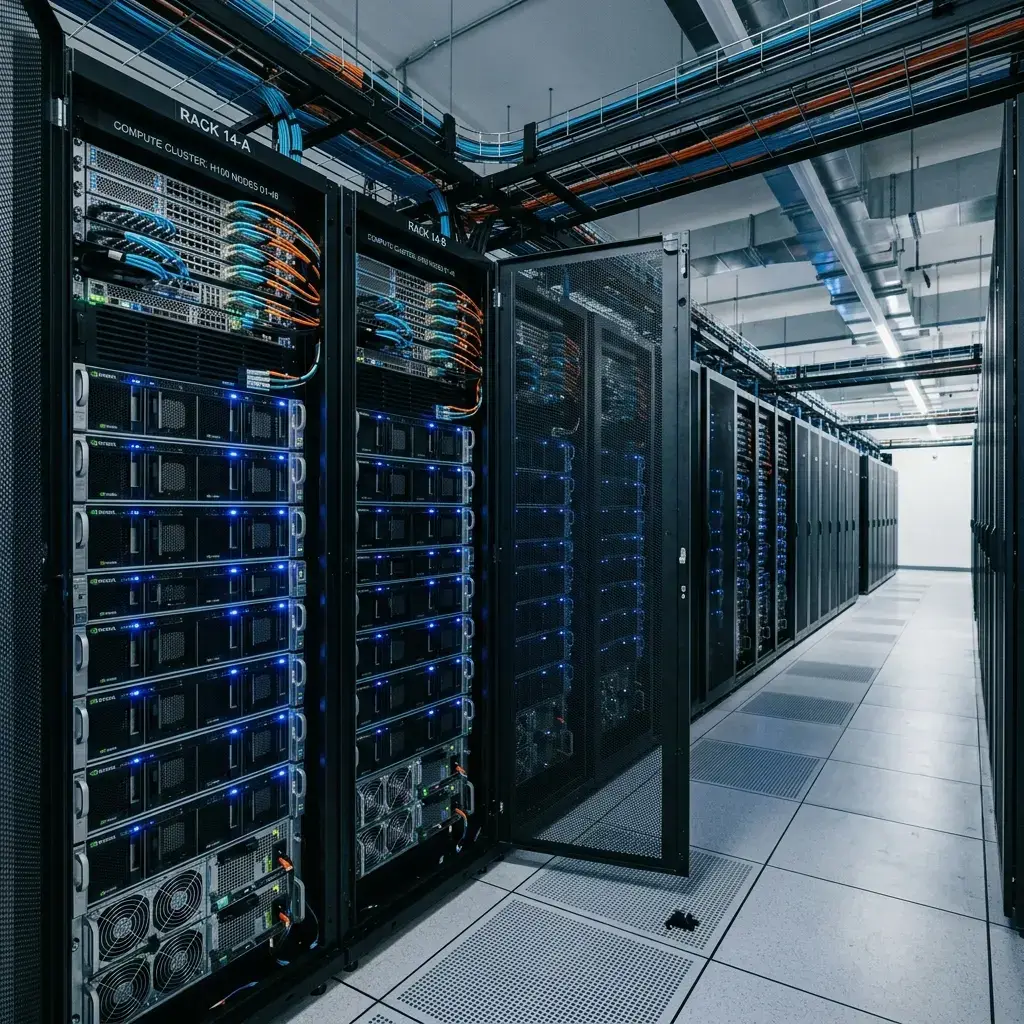
GPU Clusters
Massively parallel GPU clusters built for high-throughput AI training and inference.
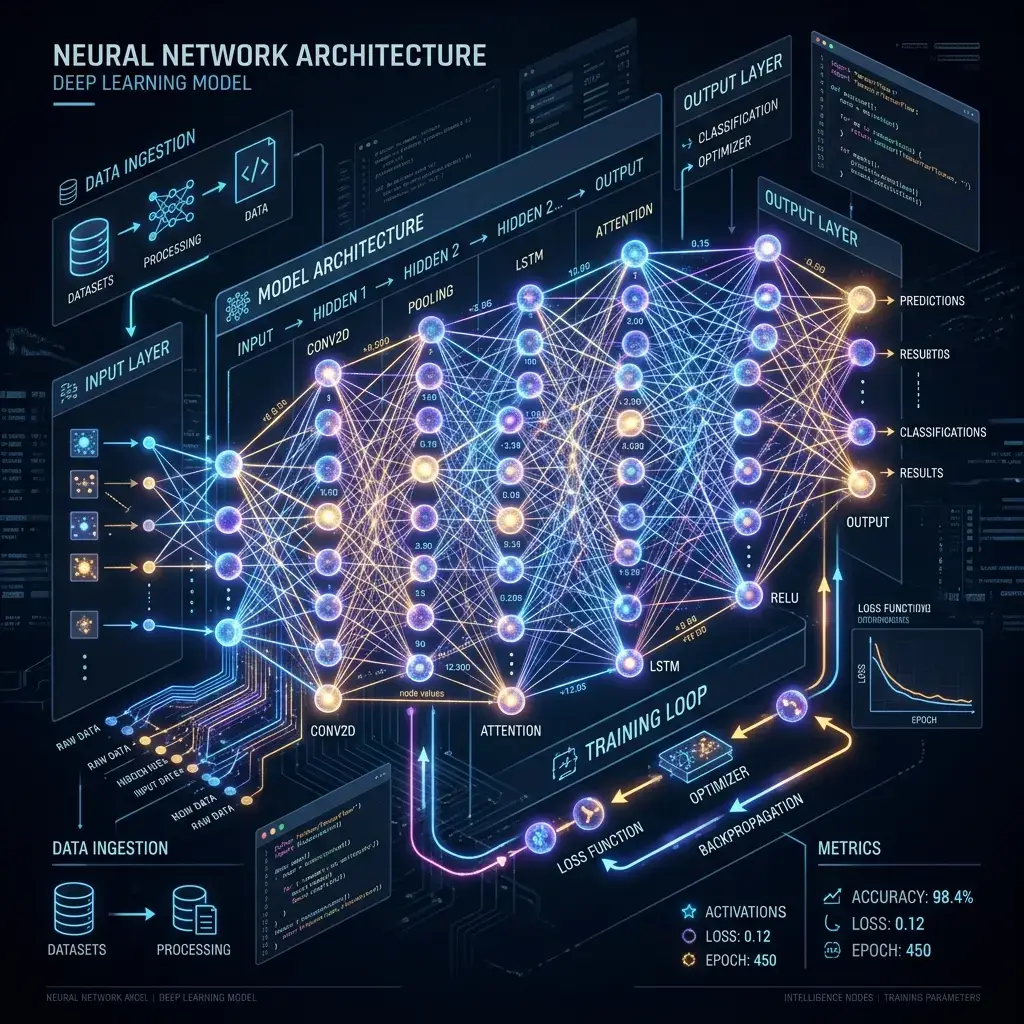
Model Training
Distributed training at scale with advanced weight optimization and accelerated learning pipelines.
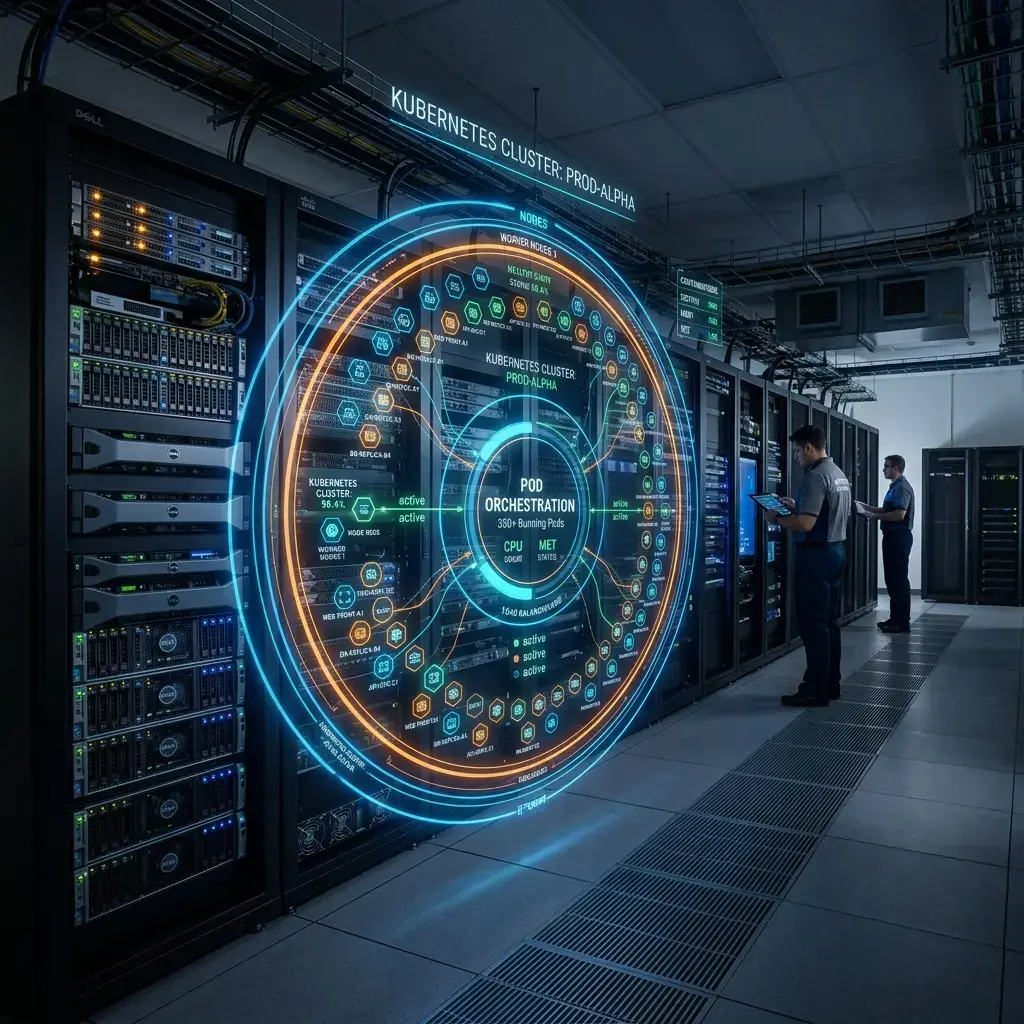
Model Hosting
Secure, scalable container registries and deployment environments for enterprise AI models.
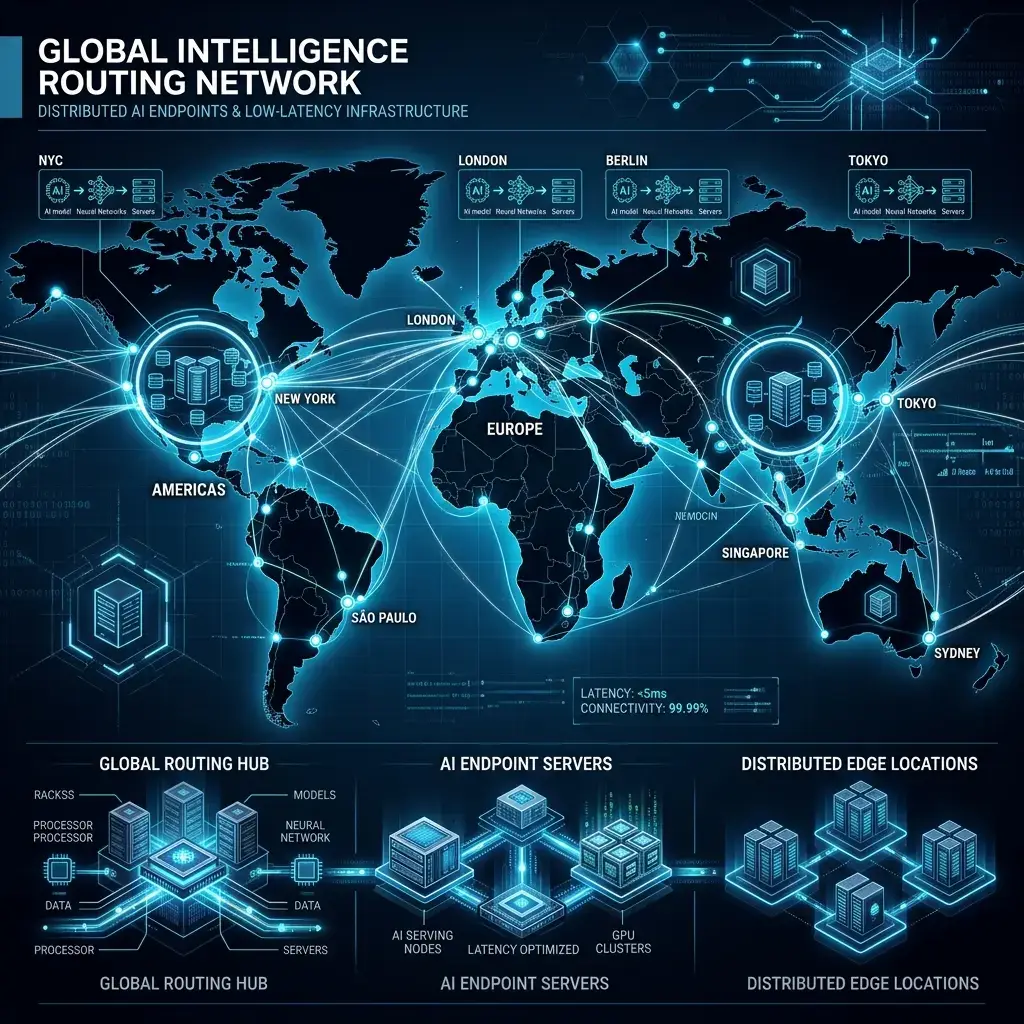
Inference Platforms
Low-latency distributed inference environments for real-time AI applications.
Enterprise AI Security
Protect models, data, and enterprise operations through Zero-Trust security, encryption, and governance frameworks built for mission-critical AI deployments.
Maintain complete control over sensitive intelligence while meeting global compliance and operational security standards.
Zero-Trust Verification
Every access request is continuously validated before permissions are granted.
Encryption & Key Management
Protect enterprise data through advanced encryption and secure key vaults.

Compliance & Governance
Meet regulatory standards with centralized governance and audit-ready controls.
Enterprise Security Layer
Enforce physical and digital zero-trust boundaries. Secure your intellectual property, model parameters, and corporate databases with hardware-isolated enclaves and real-time posture assessment.
Infrastructure Security
Physical facility and hardware-level isolation featuring cryptographic identity keys and multi-tenant barrier controls.
End-to-End Encryption
Keep critical model weights and data pools secure in transit, processing, and storage states via HSM key modules.
Zero-Trust Access Control
Strictly defined operational authorization policies ensuring continuous validation of every workspace endpoint.
Compliance Management
Centralized compliance telemetry auditing system tracking data processing lines to meet SOC2 and ISO 27001 mandates.

AI Infrastructure Stack
Explore our connected layers engineered for security, high-throughput compute, private weights isolation, and strategic business control.
Security Layer
Layer 06Zero-trust access boundaries with hardware enclave isolation.
Multi-tenant sovereign AI isolation and HSM vault key operations.
Blocks pipeline eavesdropping and ensures GDPR and SOC2 compliance.
Hybrid Deployment Environments
Most enterprises need more than one answer. Cloud suits variable and bursty training demand; on-premise suits data that cannot leave your estate or steady workloads you would rather own; hybrid runs both under one control plane and is where most AI programmes end up.
Cloud Infrastructure
Rent capacity across AWS, Azure, Google Cloud or DigitalOcean. Best when demand is bursty and you would rather not buy hardware for a peak you hit occasionally.
On-Premise Infrastructure
Run in your own data centre. Best when data residency, regulation or sensitivity means the data cannot leave, or when steady workloads make owning the hardware cheaper.
Hybrid Operations
Keep sensitive data and steady workloads in-house while bursting to cloud for peaks, with secure links routing work between the two.
Unified Management
Compute allocation, system health and cost are read from one dashboard, so a hybrid estate does not mean two operating models.

What the Platform Is Engineered For
The characteristics we design and size for in every build. Targets are agreed per engagement against your workloads, not quoted as generic numbers.
Failover by Design
Redundant nodes and automated failover, with the availability target set against your own service requirements.
Scales With Data
Storage and throughput sized to your datasets, and expanded as training data and usage grow.
Encrypted by Default
Model weights and data encrypted at rest and in transit, with keys held in hardware security modules under your control.
Cloud, Hybrid, On-Prem
One control plane across public cloud, hybrid and on-premise.

Infrastructure Operations Center
Monitor real-time system performance from a centralized network operations cockpit. Track active GPU loads, temperature thresholds, low-latency API routes, and container lifecycle events.
Monitoring
Live visibility of nodes, memory, storage and power draw, so capacity problems are seen before they reach the teams using the platform.
Resource Management
Clusters are allocated to the highest-priority work and balanced across environments, so critical jobs are not queued behind experiments.
Service Availability
Failover systems and automated recovery keep services running through hardware faults, with the availability target agreed with you up front.
Cost and Capacity Review
Idle capacity and bottlenecks are identified from your own usage data, which is where infrastructure cost is usually recovered.
AI Infrastructure Roadmap
Map out your enterprise scalability milestones. From establishing initial private GPU clusters to global multi-cloud orchestration and fully autonomous private enclaves.
Establishing Sovereign Compute
Procure local hardware clusters, host private model weights, and implement zero-trust security layers behind secure company firewalls.
Unifying Hybrid Networks
Integrate AWS, Azure, and GCP Resources. Enable automated container orchestration and low-latency global query routing.
Cognitive Platform Scale
Deploy real-time inference networks, optimize energy Metrics, and scale agents autonomously across multi-tenant infrastructures.
Build Your AI
Infrastructure
Tell us what you are trying to run — training, inference, or an AI platform your teams build on — and the constraints you have on data, budget and timeline. We will size the infrastructure against those and show what it takes to run it.